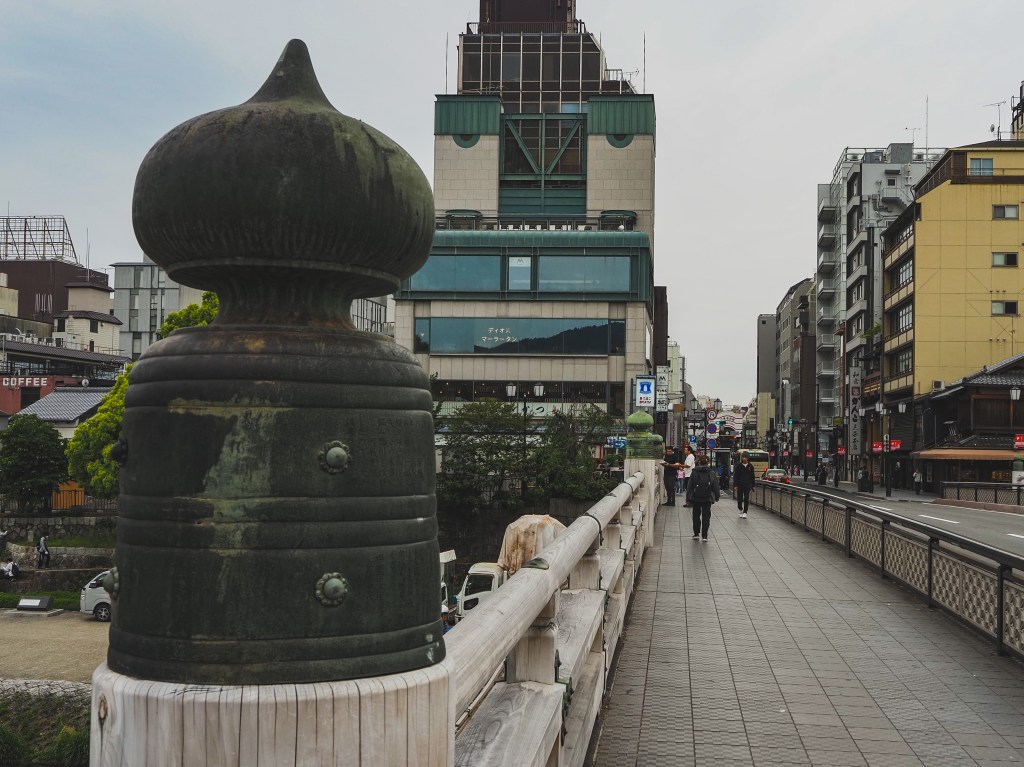
It was a spur of the moment thing. I’d promised myself to get back to the mountains after walking off the Tokai Shizen Hodo in Golden Week of 2025. Belt out another hundred peaks and belt out a sequel to my multi-dozen selling doorstop. Hey! Have you grabbed one yet? What are you doing reading this when you should be reading that? But, anyway, then I thought I’d chill for a bit; take Kid.2 to summer swimming classes. And then I turned 50. Soon after that, 2026 arrived and I was in Oz, sucking down cold ones. Then, back in Kyo-town I decided it was too cold/too expensive/too much effort to start. Somewhere in the middle of all this, the bears began eating people. As their guts grew bigger so did mine. Bear guts/beer guts. A trail runner devoured in Hokkaido. A newspaper delivery guy plucked off the street, no less! Some poor bloke cleaning a rotemburo, dragged off into the woods of Iwate. It didn’t help that whenever I contemplated a hike, bear videos would pop up on YouTube. It was like plane crash videos appearing when I’m ready to head home. The internet can read your mind. We all know that now.
But, I had to do something. “I have to climb mountains,” I said. The Missus bought me fire crackers – to deter the bears. “Hunters use them,” she said. I wondered why they didn’t use their guns. Then she bought me a starter pistol – a pack of two. They looked harder to reload than my mountain mojo. I imagined the struggle as a slathering beast bore down on me. My sweaty hands and fat fingers frantically attempting to set the little paper square the size of an acid tab into the shallow notch of the pistol. I imagined the wind blowing it away at the crucial moment – or the breath of the beast upon me…
So, Golden Week ’26 rolls around and I think “Bugger it. I’ll walk to Tokyo again. On the Nakasendo this time.”
The Nakasendo: the old inland highway running from Edo (Tokyo) to Kyoto rose to prominence in Japan’s Edo Era (1603-1868). An alternative to the more heavily trafficked Tokaido that paralleled the Pacific, the Nakasendo took to the mountains. It was harder graft for travelers but a route less prone to seasonal flooding and one that allowed more covert passage for the ne’er-do-wells amongst the population. “The Ancient Samurai Road,” a YouTube video calls it. The most famous, ultimate, legendary hiking experience in the land. There was even a complete video guide for a whole eight kilometres of it that had garnered a billion views. The whole eight kilometres if you believe that or most of the other videos purporting to tell viewers what’s what. Even Japan’s national tourist office says you can walk the entire trail in four or five days. Some highly motivated souls can even do it in three. I didn’t bother to look any further. The agency is obviously promoting nothing much more than a slightly longer stretch that centred around the eight previously mentioned kilometres. From Tokyo to Kyoto, the whole thing tops 500 kilometres. If I was going to do it, I was going to do the whole thing. Not that it’s a hiker’s hike for the most part. It’s a slog. A tarmac torture test. A bitumen battle. An asphalt ass-kick. I knew that much. That being said, the bit I walked during my time on the Tokai Shizen Hodo was rather pleasant. And I was certain I could find things to entertain my curiosity along the more ‘boring’ stretches.
The Visitor Center down the street had a Nakasendo book. I grabbed a copy and perused woodblock print images made 200 years ago by a pair of well-renowned chaps – Keisai Eisan and Utagawa Hiroshige – who put them together by memory, rough sketches and artistic license. It’s a good book – to look at. Doesn’t help much otherwise. And then only 30 percent of it is legible. The rest is in French and German. Anyways, seeing this is a project I hope to complete across the Japanese summer, all I really need to know is where to stop for soft cream…
I assume posts on the front page here will appear from the most recent and slip slide away into the past, so I’ll link them in order here:
Day 1: Kyoto to Otsu

